By Mohammed Rashad Hussain, Managing PartnerPublished 8 min read
What does the RTA actually license?
In Dubai, carrying paying passengers in a luxury car with a driver is a licensed activity of its own. RTA calls it Passenger Transport by Luxury Motor Vehicles. The legal basis is Executive Council Resolution No. 6 of 2016 and its Executive Regulations No. 516 of 2022, which regulate passenger transport in the emirate.
A company needs two documents before its first paid ride:
- A trade licence from Dubai’s Department of Economy and Tourism (DET), or from a free zone authority, carrying the activity. DET’s activity code is 602207.
- An RTA permit for the same activity, RTA activity code 325. RTA’s Public Transport Agency studies the application, and the Commercial Transport Activities Department of its Licensing Agency issues the permit.
The trade licence is only the first step. The RTA permit is what lets the cars carry paying passengers.
What a company commits to before RTA grants the permit
RTA’s activity card lists the conditions. A licensed limousine company has to:
- Submit a feasibility study covering how its cars will run, its budget, and its staff and their experience.
- Lodge a cash or bank guarantee in favour of RTA under a concession contract.
- Keep a suitable headquarters to manage and operate the cars.
- Charge the tariff RTA sets, which must be higher than the taxi tariff.
- Link its apps and booking systems to RTA’s electronic platform.
- Follow RTA’s service level agreements.
- Keep to the vehicle categories, numbers, types and maximum time in service that RTA approves.
- Keep its cars off the road until the agreement with RTA is signed.
For a passenger, the last four matter most. The price sits above a taxi by rule, the cars are on an RTA-approved list, and the company answers to RTA service levels. Assure’s office is in the Al Nisf Building on Dubai Airport Road, Al Garhoud, a short drive from DXB. More on the company is on the about Assure page.
What rules do licensed limousine vehicles have to meet?
RTA approves the fleet company by company: which categories of luxury car, how many, which types and the longest each may stay in service. The activity card does not publish one age limit for every fleet. So ask the company for the model year of the car it is sending.
Platforms add their own rules on top. Uber’s UAE requirements accept Uber Lux cars built in 2021 or later. Every Dubai car on Uber must carry a registration card for an RTA-approved limousine. Uber also accepts cars approved by RTA, ITC in Abu Dhabi or SRTA in Sharjah “in their registered cities only”.
For you, that registration card is the proof that matters. Corporate buyers can ask for a copy of each car’s card with the fleet list. The cars themselves, from Lexus ES sedans to Mercedes-Benz V-Class vans, are compared in types of limousine cars in Dubai. For what each class suits on the day, see our limousine service.
What must a licensed chauffeur hold?
A Dubai limousine driver works for a licensed company and carries an RTA permit card. Uber’s UAE driver requirements show what that looks like in practice:
- A valid RTA card for the driver.
- Work as a limousine driver under an RTA-registered limousine company, on that company’s visa.
- The same employer named on the driver’s Emirates ID and on the RTA permit card.
Other schemes add to this. Under RTA’s Takamul permit, drivers must be listed in RTA’s Transport Activities Rental System (TARS). In Ras Al Khaimah, Resolution No. 3 of 2021 has RAKTA issue its own permits for limousine drivers.
So an RTA approved chauffeur is a driver with an RTA card, employed by the permitted company whose car you are in. If the company on the card and the company on your booking differ, ask why before you set off.
Are passengers insured in a licensed limousine?
Yes. UAE insurers issue third-party motor cover on one standard wording, set by Insurance Authority Board Decision No. 25 of 2016 and kept in the Central Bank’s rulebook. Under it, the insurer compensates death or bodily injury to any person, passengers included. There is no cap: the insurer pays the amount a court awards.
The details that matter to you:
- A passenger is covered while inside the car, getting in or getting out.
- The insurer also pays hospital and treatment costs.
- The policy does not cover the owner, the driver who caused the accident, or the owner’s employees injured at work. A personal accident endorsement can add them for an extra premium.
- Accidents outside the UAE are excluded. A trip to Oman or Saudi Arabia needs separate cover, so ask how the car is insured across the border before you book a cross-border transfer.
The licence matters to the owner as well. In some cases the insurer can recover what it paid from the owner. One is a car used for a purpose not declared on its insurance application, where that use caused the accident. Another is a car carrying more than its maximum number of passengers. So do not squeeze 7 people into a 6-seat van, and ride in cars declared for paid passenger work.
How can you check a company before you book?
Five checks take a few minutes on WhatsApp:
- Ask for the trade licence. The company name should match your quote and invoice. The expiry date should be in the future, and the activity list should include Passenger Transport by Luxury Motor Vehicles.
- Ask for the RTA permit for that activity, in the same company name.
- Ask for the car’s plate number and model before pickup, and check both when the car arrives.
- Look at the driver’s RTA card if anything feels wrong. The employer on it should be the company you booked.
- Get the price in writing, with waiting time and extras spelled out.
If something does not add up, RTA’s call centre on 800 9090 and ask@rta.ae take complaints about taxis and limousines. The wider buying checks are in our guide to hiring a chauffeur in Dubai.
Does a Dubai licence cover trips in other emirates?
It covers trips that start in Dubai, with a federal step for the rest. RTA’s activity card sends permit holders to the Federal Authority for Land and Maritime Transport when the activity runs outside Dubai or serves destinations in other emirates. Each emirate also licenses its own limousines: ITC in Abu Dhabi, SRTA in Sharjah and RAKTA in Ras Al Khaimah.
In practice:
- A trip from a Dubai hotel to Abu Dhabi, Sharjah or Ras Al Khaimah starts under the Dubai permit.
- A day of local trips that start and end inside Abu Dhabi or Sharjah belongs to a company licensed in that emirate.
- Uber applies the same idea and accepts licensed limousines in their registered cities only.
Assure drives from Dubai to all 7 emirates. Local trips that start and end inside another emirate may need a partner licensed there, so ask us to confirm for your route. Routes and drive times are on the intercity transfers page, and hourly hire inside Dubai is on our chauffeur service page.
Why ride-hailing premium cars are also licensed limousines
An app is a booking channel, not a licence. In Dubai, Uber’s Lux and XL classes take only RTA-approved, limousine-registered cars. Their drivers are limousine drivers employed by RTA-registered companies. Dubai Taxi’s own limousines also take Bolt, Careem and Uber bookings, at each app’s listed fares.
On 7 March 2025, RTA announced the Takamul permit, which links luxury transport companies with car rental firms. It lets a customer hire a luxury car with a chauffeur for up to one month. Both companies need a shared member on their commercial licences, and the rental contracts must be registered. For how the apps compare with a chauffeur on price and practicality, see chauffeur, taxi, Uber or Careem.
How do you check a Dubai trade licence?
DET issues the trade licence for mainland companies, and a free zone authority issues it for free zone companies. Read three lines on the copy the company sends:
- Trade name: the same name as on your quote, the RTA permit and the invoice.
- Expiry date: still in the future on your travel date.
- Activities: Passenger Transport by Luxury Motor Vehicles, DET activity code 602207.
If the company will not send a copy, treat that as the answer. To confirm a mainland licence is still active, use DET’s “Search for licence information” e-service, which the UAE government portal lists for Dubai. The same portal points to the National Economic Register for licences across the emirates. A free zone licence is checked with the free zone authority that issued it.
What should a corporate buyer keep on file for audit?
Keep one folder per transport vendor, and refresh it at each licence renewal.
| Document | What to check |
|---|---|
| Trade licence, DET or free zone | Company name, expiry date, activity code 602207 |
| RTA permit for Passenger Transport by Luxury Motor Vehicles | Same company name, expiry date |
| Insurance certificate for each car | Third-party cover in force, any personal accident endorsement, cover for trips outside the UAE |
| Fleet list | Plate numbers, models, model years, and the registration card showing RTA-approved limousine use |
| Driver list | RTA permit cards, with the employer matching the vendor |
| Partner vehicles | Which cars come from partners, and under whose licence each one runs |
| Takamul permit, for hires of up to a month | Both company names and the registered contract |
Assure labels partner cars as available through its partner network, subject to availability, so your file shows which cars are its own. The full question list for a tender is in the corporate transport RFQ checklist. Account terms and monthly invoicing are on the corporate page.
Photos in this guide

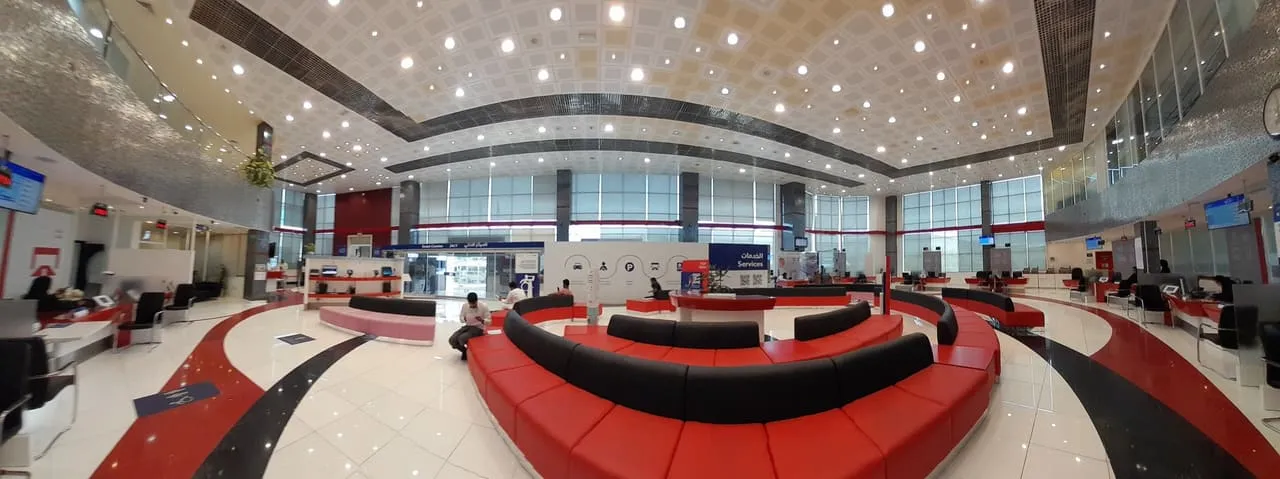
The customer service hall at an RTA centre in Dubai, with red seating and service countersChalliyan / Wikimedia Commons, CC BY-SA 4.0

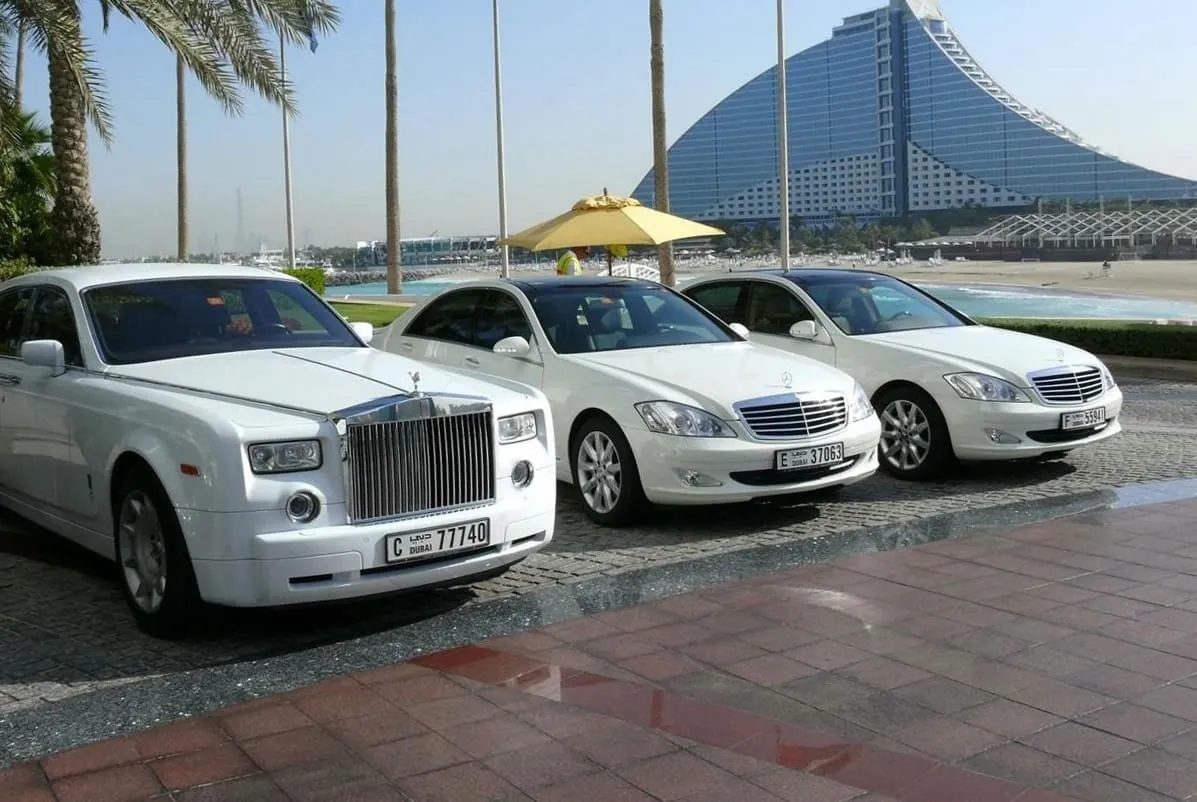
A white Rolls-Royce Phantom and two white Mercedes-Benz S-Class cars with Dubai plates outside the Burj Al Arab, with the Jumeirah Beach Hotel behindImre Solt / Wikimedia Commons, CC BY-SA 3.0
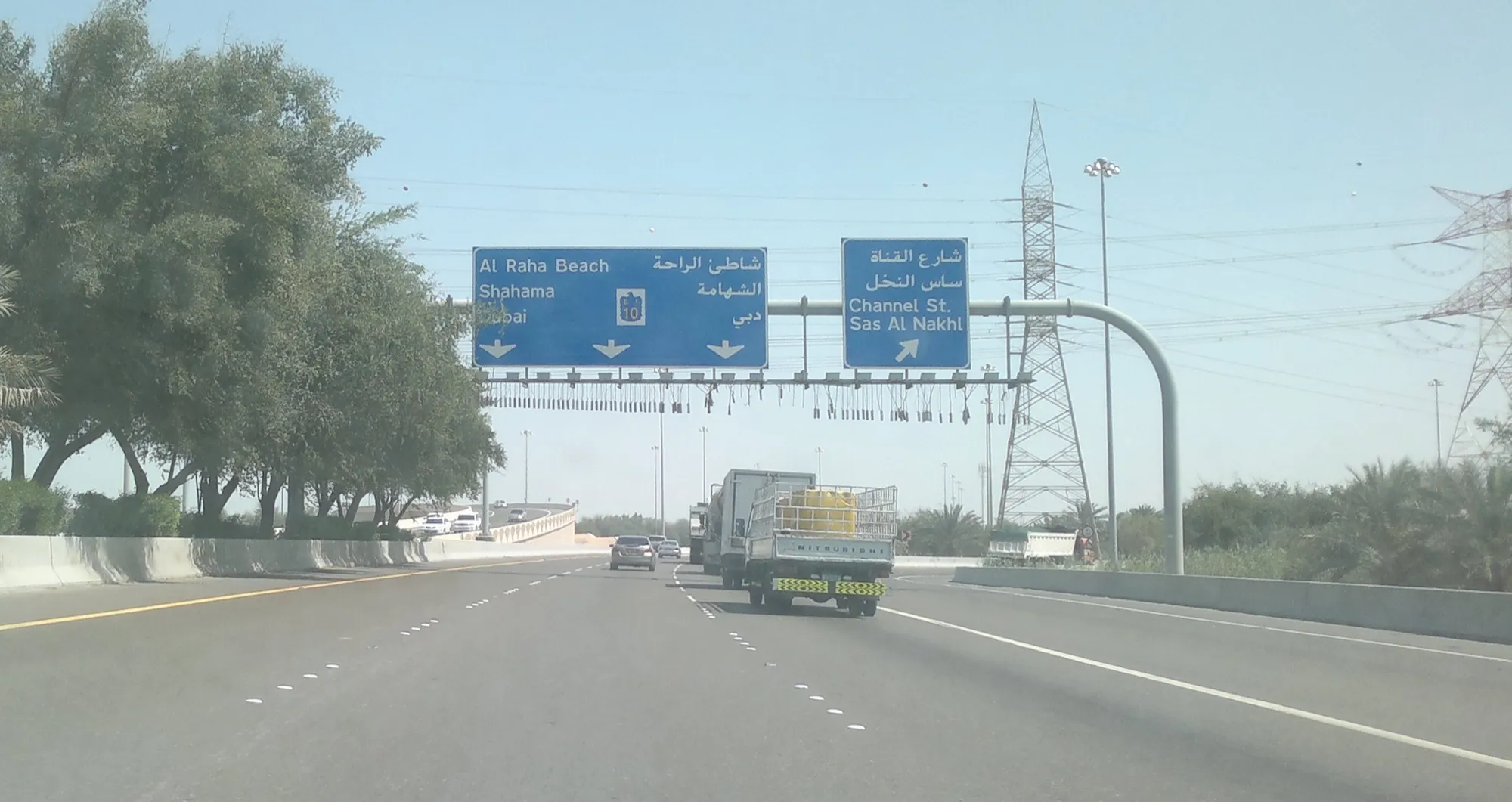
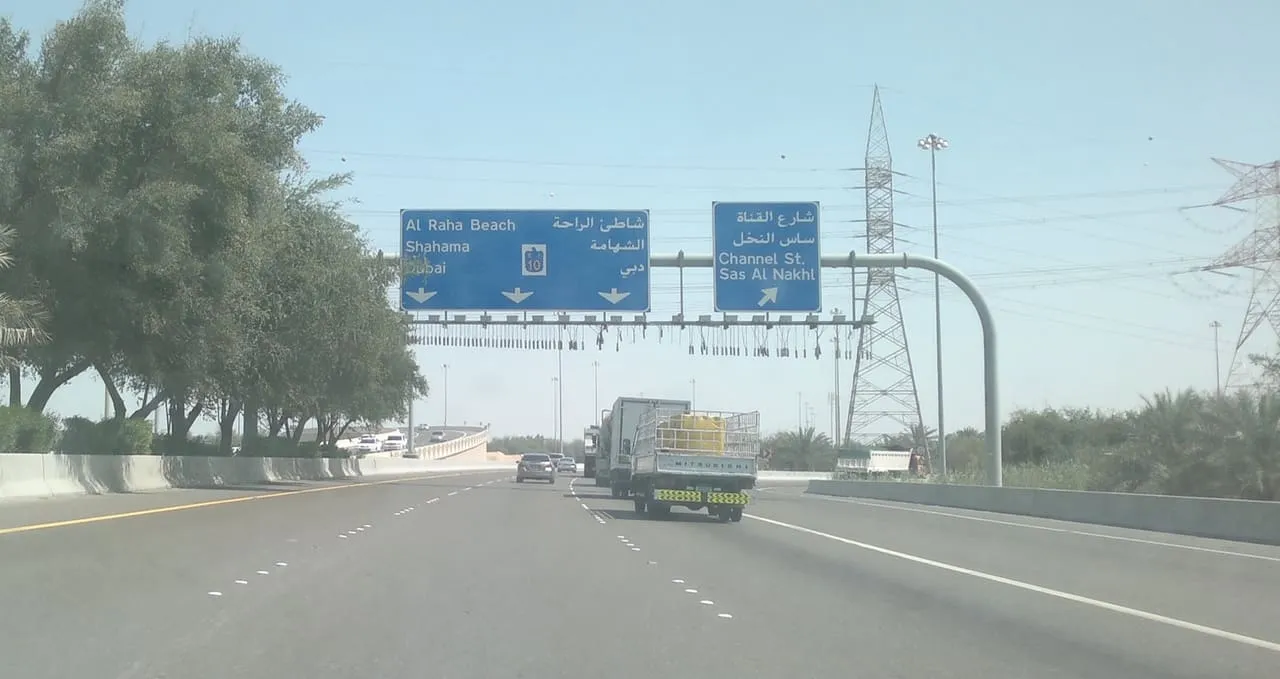
Overhead signs on a road in Abu Dhabi pointing ahead to Al Raha Beach, Shahama and DubaiRizwan Ullah Wazir / Wikimedia Commons, CC BY 3.0