By Mohammed Rashad Hussain, Managing PartnerPublished 5 min read
Which pricing model suits which kind of trip?
Four models cover almost all corporate chauffeur work in the UAE. Each one answers a different question: how many places, how many hours, how many days a month.
| Model | You pay for | Fits |
|---|---|---|
| Per transfer | One fixed journey, point to point | DXB Terminal 3 to a Business Bay office, a hotel to a Sharjah factory |
| Hourly | Time with the car, usually with a minimum booking | Three meetings in DIFC, Dubai Internet City and Jumeirah on one afternoon |
| Day rate | One car and chauffeur for a stated number of hours | A roadshow day, a site visit with several stops |
| Monthly retainer | A dedicated car and chauffeur on set days | An executive who needs a car most working days |
Pick by itinerary, not by headline figure. A rate that looks low per hour can cost more than a transfer price if the car idles between two short meetings.
For the wider picture of how companies buy this service, read our corporate ground transport guide. The same four models apply whether you book a chauffeur service, a car with driver or a private driver on a monthly basis.
What is included in a corporate chauffeur rate?
A quote should state, in writing, what the figure covers. Ask for these points before you compare two operators:
- Car class. A business sedan, a luxury sedan or an SUV, and the seat count for the passengers and bags.
- Hours or route. The start time, end time and pick-up and drop-off points.
- Waiting time. How much is free after a landing or a meeting, and how it is charged after that.
- Tolls. Whether Salik and Darb are inside the price or listed as separate lines.
- Chauffeur. A licensed chauffeur in a clean, licensed car. Assure is RTA licensed.
Assure does not publish a rate card. Send the route and hours on WhatsApp, and the quote comes back in writing.
Which extras appear on the bill?
Extras are where two similar quotes drift apart. Check each of these.
- Waiting time. Airport pickups and long meetings are the usual cause.
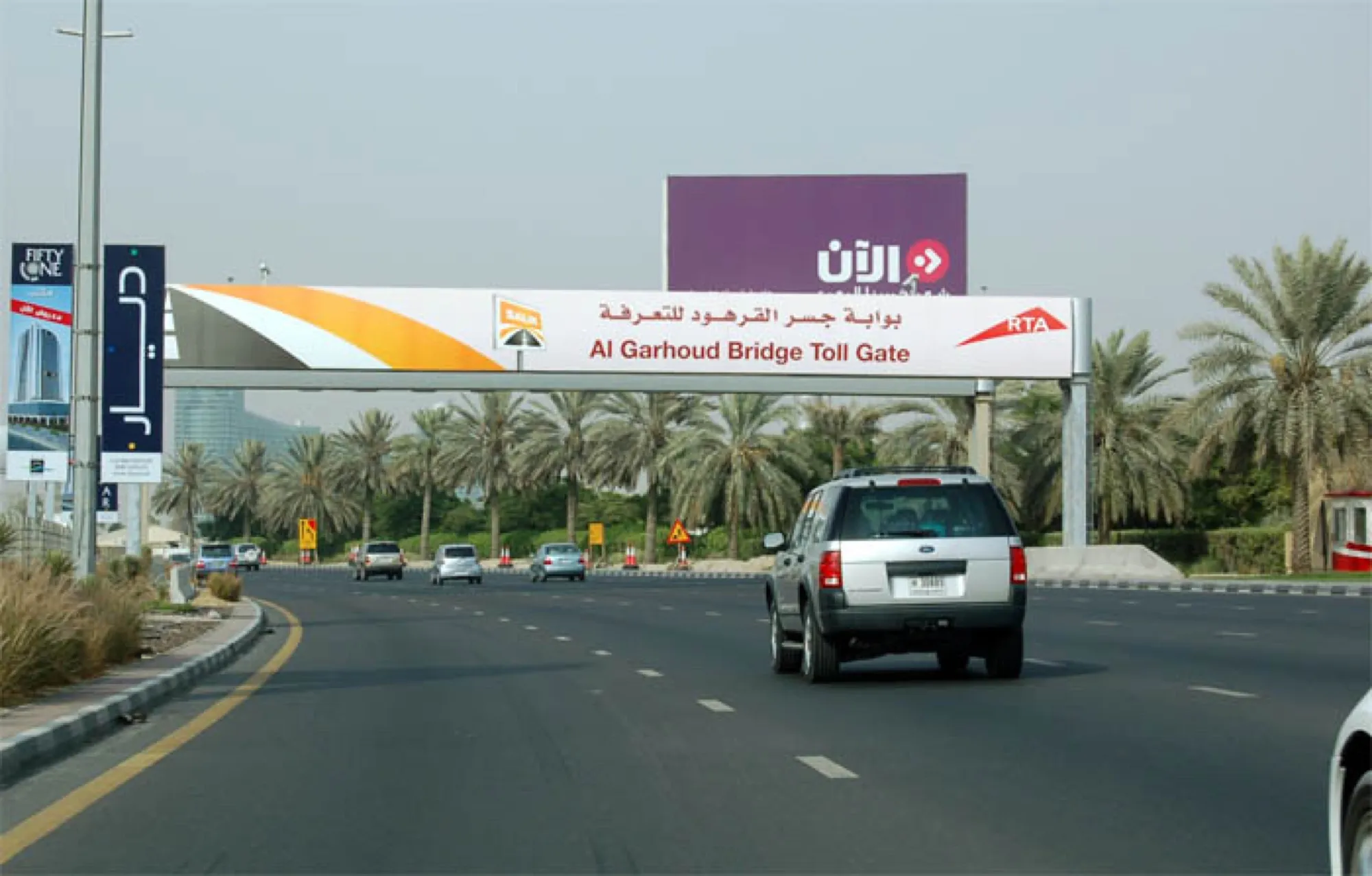
- Salik. Dubai’s tolls charge AED 6 at weekday peak (6 am to 10 am, 4 pm to 8 pm), AED 4 off-peak and on Sundays, and nothing from 1 am to 6 am. 5% VAT has been added to each charge since 1 June 2026. Our Salik guide lists the gates.
- Darb. Abu Dhabi’s tolls are separate. The Ghantoot gate on the coast road from Dubai charges AED 4 per crossing at any hour.
- Airport parking. If the chauffeur parks rather than waits at the kerb, the operator may pass the fee on.
- Extra stops. A pickup at a second hotel or an office detour changes the route.
- Night hours. Ask whether work after a set hour is billed differently.
A good quote says whether each of these is included. If it says nothing, ask.
How do intercity and cross-emirate trips change the price?
Distance and the return leg set the price. Dubai to Abu Dhabi is about 139 km and 1 hour 28 minutes in free-flow traffic. The Dubai to Sharjah run is about 26 km, or 27 minutes. Both figures come from OpenStreetMap road data and exclude congestion.

The question that matters is what the car does next. If it waits for you in Abu Dhabi for four hours, you pay for the wait. If it drives back empty and returns later, you pay for the extra kilometres instead. State which you want when you ask for the quote. Our intercity transfers pages list the routes.
When does a monthly retainer beat ad hoc bookings?
A retainer pays for availability. You get the same car and the same chauffeur, who knows the executive’s office, schedule and usual routes. The sum is fixed, whether the car moves 90 hours or 140.
To test it, take the monthly retainer and divide it by the hourly rate for the same car class. The answer is the break-even in hours.
Illustration only, not an Assure rate. If the retainer were 12,000 units and the hourly rate 100 units, break-even would be 120 hours. A director using the car 6 hours a day on 22 working days uses 132 hours, so the retainer wins. A visiting team that needs the car 40 hours a month does not.
Two checks make the sum honest. Count waiting hours as used hours, because an hourly booking charges for them. And ask what happens when the chauffeur is on leave or the car is serviced. The company car versus chauffeur guide puts the in-house alternative on the same scale.
How do peak weeks affect availability and rates?
Large exhibitions and event weeks fill the best cars first. Rates may differ from a quiet week, and last-minute requests can fail on availability before they fail on price. Book as soon as your dates are fixed. Check the UAE events calendar for dates that overlap your visit, and ask the operator to confirm the car in writing.
Questions to ask before you accept a rate card
- Is the price per car or per passenger?
- What are the minimum hours on an hourly booking?
- How much waiting time is free?
- Are Salik and Darb included, or itemised?
- Is VAT shown as a separate line? See VAT on chauffeur services.
- How are cancellations and no-shows handled?
- Who can book, and how is the monthly invoice laid out? The corporate account guide covers this.
When you have the answers, send the request through the corporate page and the quote follows.
Photos in this guide

A wide road in Business Bay, Dubai, with the Burj Khalifa rising between office and residential towersLxs / Wikimedia Commons, CC BY 4.0

The Salik gantry marked Al Garhoud Bridge Toll Gate over the road approaching the bridge, photographed in 2007Appusviews at Malayalam Wikipedia / Wikimedia Commons, CC BY-SA 3.0

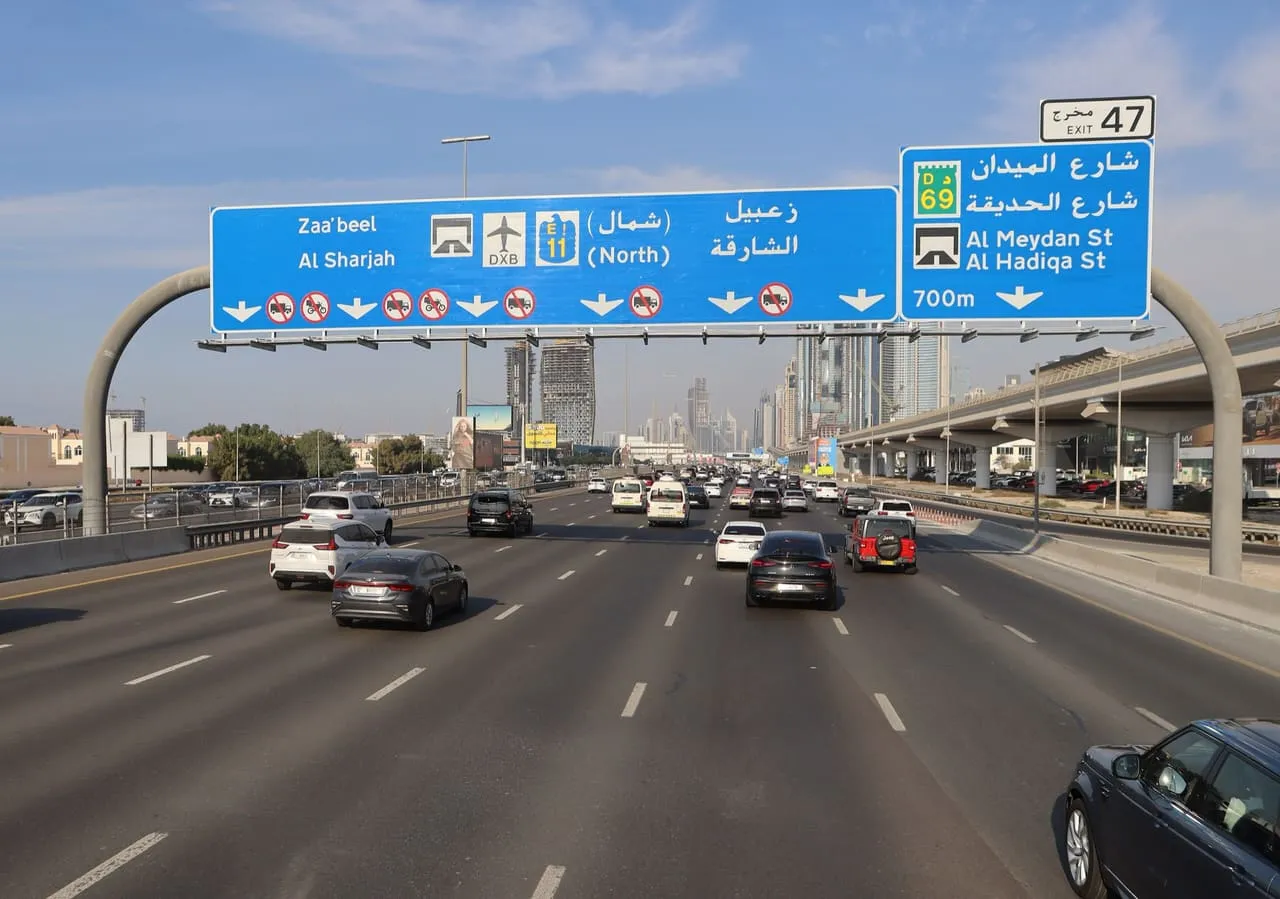
Traffic on the lanes of Sheikh Zayed Road in Dubai, seen from an overpass with towers on both sidesVincent Eisfeld / Wikimedia Commons, CC BY-SA 4.0