By Mohammed Rashad Hussain, Managing PartnerPublished 5 min read
Who sets the rules for worker transport in the UAE?
No single document covers every staff bus. Four layers apply, and an employer should know which is which.
| Layer | Covers |
|---|---|
| MoHRE (Ministry of Human Resources and Emiratisation) | Labour law, working hours, the midday break, worker accommodation standards |
| Ministry of Interior | Traffic law and vehicle standards, and the 2019 worker bus scheme with MoHRE |
| Emirate transport authority | Licensing of the operator and the vehicle. In Dubai, the RTA |
| Your contract with the operator | Vehicle size, pickups, replacement vehicles, penalties |
Federal Decree-Law No. 33 of 2021 is the main labour law. For the wider picture of how companies buy transport, see our corporate ground transport guide.
What do the 2019 labour bus standards require?
On 5 May 2019 MoHRE and the Ministry of Interior launched the Happiness Bus for workers. Gulf News reported the features at launch: air-conditioned buses with portable fans, a cold drinking water unit, a first aid box, an emergency exit door, tubeless tyres and a contact system. Buses were to carry the entity’s name, a speed limit sticker and a number for complaints, and annual inspection was announced.
We could only find 2019 press coverage of this scheme, not a current official text. Treat the list as a starting point. Ask MoHRE, or your operator, for the standard in force today and ask the operator to show how its vehicles meet it.
MoHRE also publishes Cabinet Resolution No. 13 of 2009 on group labour accommodation, which includes a section on transportation and vehicle safety. The MoHRE copy is a third-party translation, so read the Arabic original for a firm position.
Does the summer midday break change transport schedules?
Yes, through the shift. The u.ae portal says outdoor work is barred from 12:30 pm to 3 pm between 15 June and 15 September each year. That is a rule on work in open air, not on buses.
For transport it changes the clock. A crew on an open site in Jebel Ali or Dubai South may stop at 12:30 and restart at 3:00, or start earlier and finish earlier. The bus must match the revised roster. A late pickup in the afternoon heat is also a welfare issue, so plan a shaded waiting point.
MoHRE announces the break each year. We did not find the 2026 notice, so check the current one on the MoHRE site before you fix your summer rosters.
Does commuting time count as working hours?
Usually not. The u.ae portal says the time a worker spends travelling from home to the workplace is not included in working hours, except for categories set by the Executive Regulations. Private sector working time is 8 hours a day or 48 hours a week.
Two cases need a question to MoHRE before you decide:
- Travel between two work sites during the shift.
- A worker required to attend an off-site briefing before the bus leaves.
Ramadan reduces working hours by 2 a day, which moves bus times too. Our Ramadan timings guide covers the month.
Seat belts, standing passengers and vehicle capacity
We have not confirmed the current seat belt and passenger-capacity rules under the federal traffic law from an official source, so we do not state them. Ask your operator for written confirmation of the seat count per vehicle and the applicable rule for the emirate.
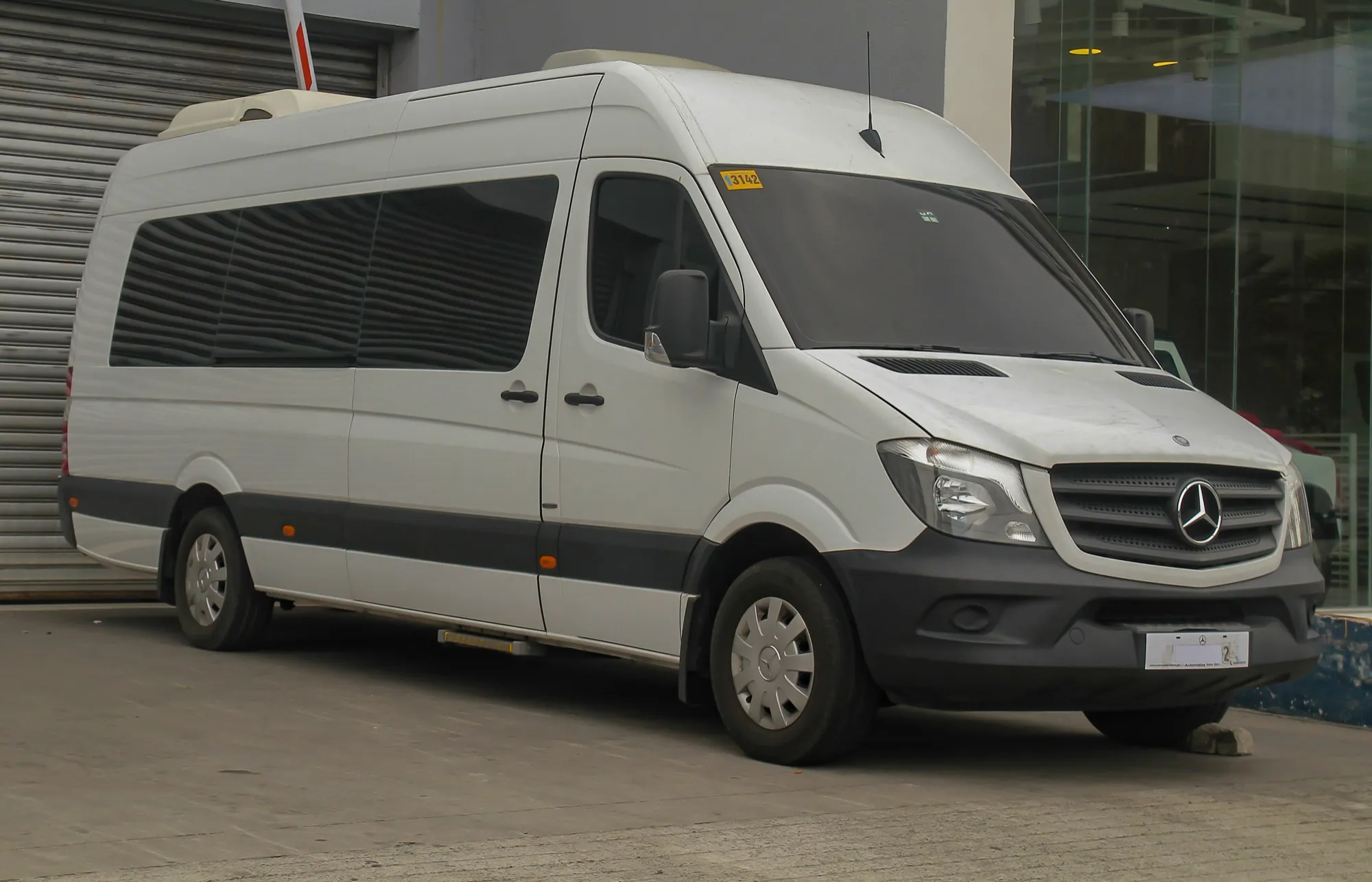
A sensible planning rule needs no law: size the vehicle for seated passengers only. A 49-seat coach carries 49 workers, not 60. A minibus with 22 seats suits a crew of 20. Our bus rental page describes the vehicles available through our partner network, subject to availability.
What happens in fog, heavy rain or a breakdown?
Ask the operator for a written plan before you sign. It should name:
- Who decides to delay a run in fog, and who tells site managers.
- How long a replacement vehicle takes to reach a stranded bus.
- Who contacts workers, and in what language.
- The route for a stopped bus on the Emirates Road, Sheikh Mohammed bin Zayed Road or other main roads.
Early-morning fog is the usual risk on highways around Jebel Ali and Dubai South, so the plan should cover the first run of the day. The duty of care guide turns this into a checklist.
Checklist for HR and site managers
- The operator’s transport licence from the emirate authority.
- Registration and inspection papers for each vehicle.
- Driver licences and the driver-hours policy.
- Insurance cover for passengers.
- A copy of the vehicle’s safety kit list: first aid, exit, water.
- The summer shift timetable agreed for 15 June to 15 September.
- A named contact available 24/7 for delays and incidents.
- A written RFQ. Our RFQ checklist lists what to include.
Planning shifts and routes: headcount, pickup points, vehicle size and monthly contracts
Start with the roster. For each shift, write the start time, the headcount and the pickup points.
- Group pickups. Put stops along one road and avoid detours.
- Size the vehicle. Match seats to headcount. A 20-person crew suits a 22-seater, and a 45-person shift a coach.
- Add a spare. For large shifts, hold a spare vehicle.
- Choose the contract. A fixed roster suits a monthly contract. A short project suits day hire.
- Plan arrivals. New hires landing at DXB need a separate pickup. See new-hire arrival transport.
Send the roster through the staff transport page or the corporate page, and Assure replies with a written proposal.
Photos in this guide

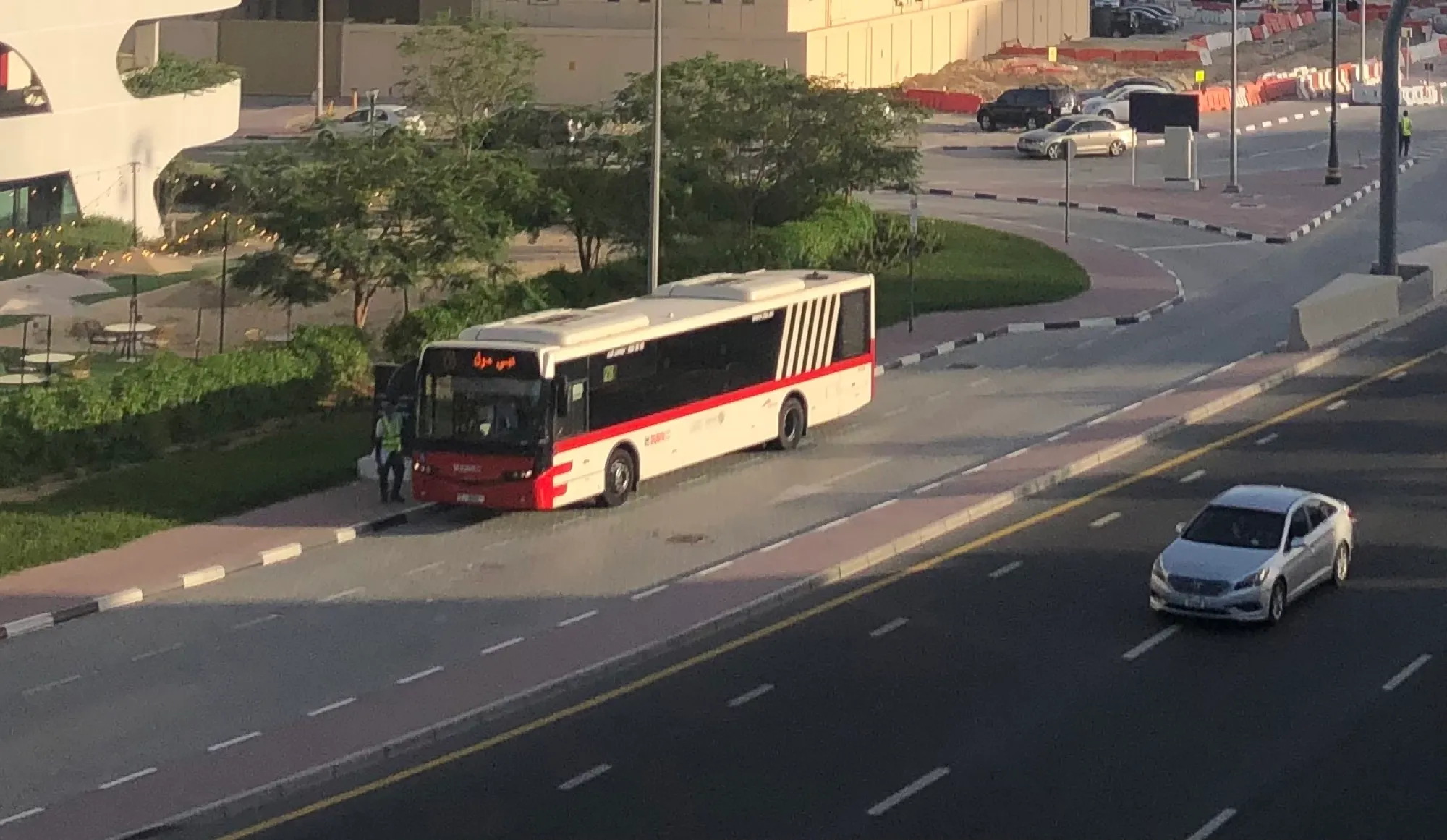
A red and white Dubai public bus stopped at a kerb beside a multi-lane roadSimon_sees / Wikimedia Commons, CC BY 2.0

A white high-roof Mercedes-Benz Sprinter minibus with passenger windows along its sideEthan Llamas / Wikimedia Commons, CC BY-SA 4.0

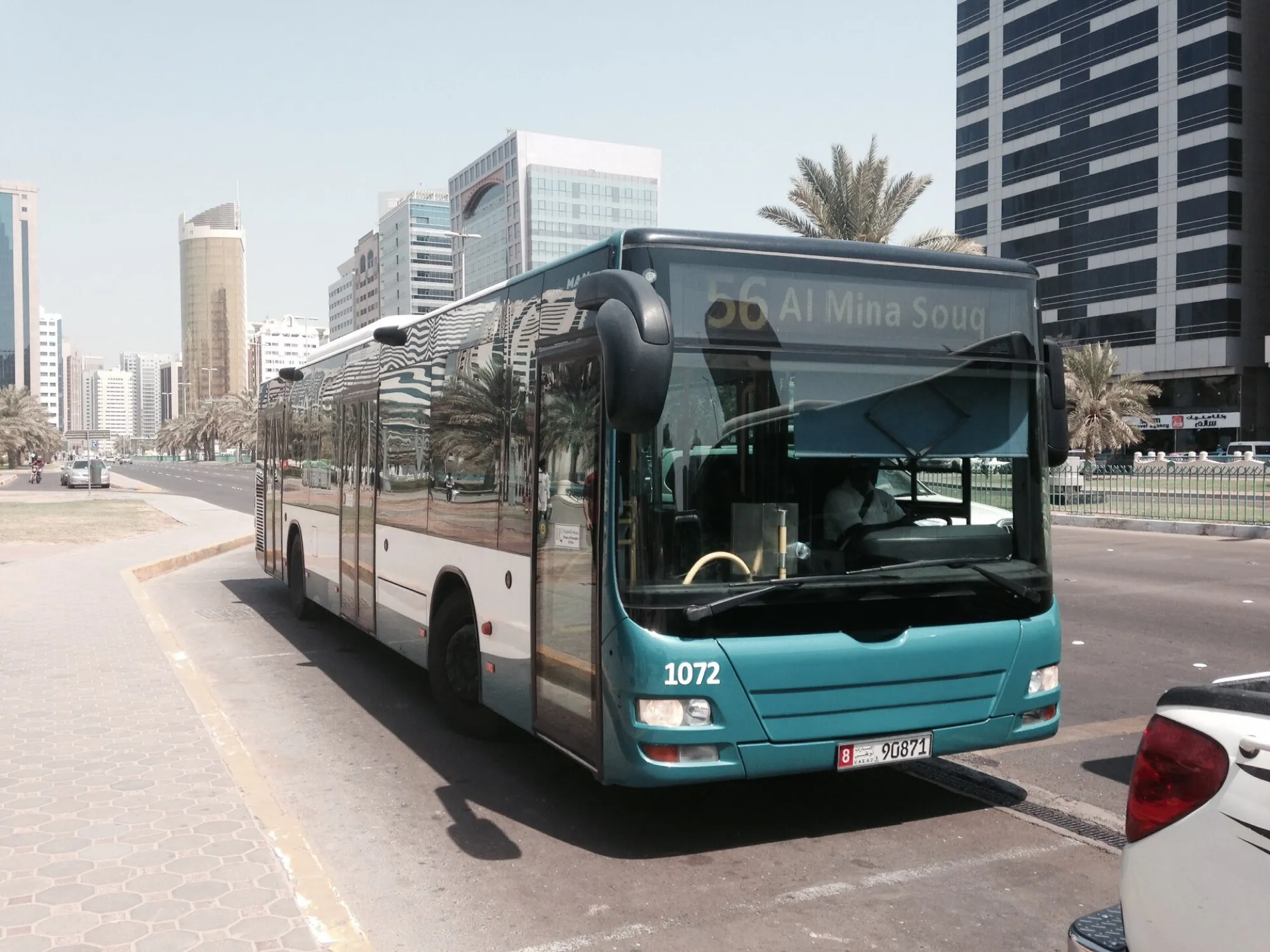
A teal and white city bus on route 56 stopped on a palm-lined street in Abu DhabiRanged Enigma / Wikimedia Commons, CC BY-SA 4.0