By Mohammed Rashad Hussain, Managing PartnerPublished 3 min read
Who gets a visa on arrival in the UAE?
The UAE Government portal gives three groups. GCC citizens need no visa. Citizens of several countries get a visa on arrival. Everyone else needs a visa approved before boarding.
The portal links to Visit Dubai and Visit Abu Dhabi for eligibility and warns that lists “may vary from time to time”. We do not print a nationality list here, because the one official page we checked does not publish it and we will not copy an unsourced one. Ask your airline at check-in, or the UAE embassy in your country, before you buy a ticket.
Our overview, UAE visas explained, shows how all the visa types fit together.
30-day list or 90-day list: how long can you stay?
Stays differ by nationality. We could not confirm the 30-day and 90-day terms from a current official page, so we leave the lists out. If your passport is on a list, your airline’s visa page will state the stay for it.
The one stay we can source is the 14-day Indian visa on arrival below.
Indian passport holders: the 14-day visa-on-arrival rule
GDRFA Dubai describes a visitor visa on arrival for Indian nationals who hold one of these, valid for at least six months:
- a US visa
- a US green card
- a UK residence visa
- a residence visa from an EU country
Stay validity is 14 days from the date the application is approved. Without one of those documents, an Indian passport holder applies for a visa first. Our UAE visit visa for Indian passport holders page covers that route.
What you need at the immigration counter
Carry your passport, valid at least 6 months from entry, and the supporting document your category depends on. Airlines also check at departure, so keep a printed or saved copy of your onward or return ticket and your hotel booking.
Can a visa on arrival be extended?
For the Indian route, yes. GDRFA Dubai’s extension service lists AED 600 plus 5% VAT. A visitor already in the UAE pays further in-country charges: AED 10 Knowledge Dirham, AED 10 Innovation Dirham and AED 500. It is requested online with a passport copy, and GDRFA lists 48 hours to complete. The fee can change, so check the card.
Not on the list? How to get a visit visa before you fly
A tourist visa is sponsored by a licensed travel agent, hotel or UAE airline. A visit visa for family or friends is sponsored by someone living in the UAE. Both need a recent photo, covered in our visa photo requirements. Filipino travellers can start at the Philippines visa page. The wider range is under visas.
Changing planes and wanting to see the city? A Dubai transit visa may fit better. If you live in another GCC country, read the GCC resident eVisa guide.
Landing at DXB, DWC or Zayed International: what happens after the stamp
At Dubai International, the GDRFA office sits in Terminal 3 arrivals near Entrance 1 and is open 24/7, according to Dubai Airports. That is where visa questions at the airport go.

Once you clear immigration and customs, your driver can meet you in the arrivals hall. Read the DXB Terminal 3 arrivals guide and the wider Dubai airport arrival process. Landing in the capital? See our Zayed International airport transfers page, or the full list of airport transfers. First time on a visit visa? Read arriving in Dubai on a visit visa.
Photos in this guide

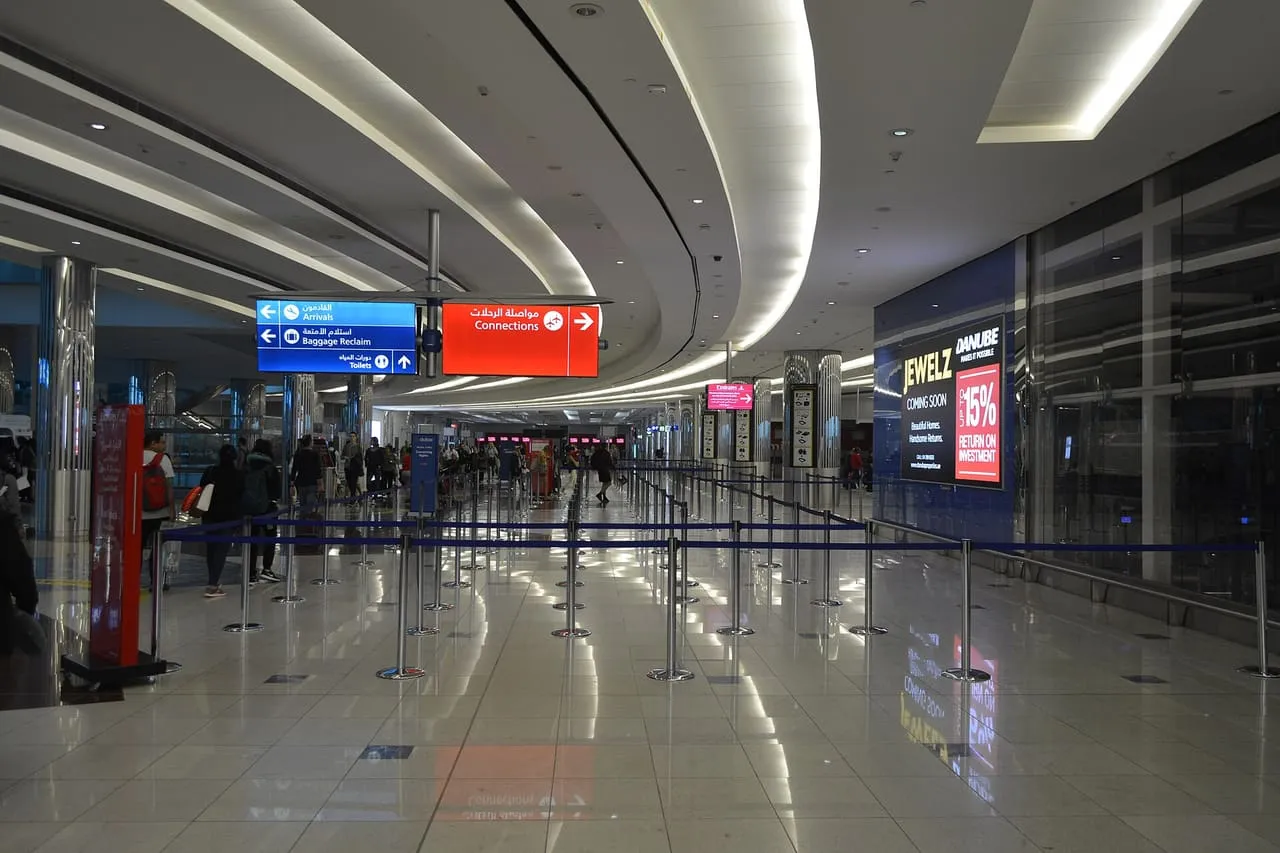
Baggage reclaim belts and travelators in the Terminal 3 arrivals hall at Dubai International in 2009DearEdward / Wikimedia Commons, CC BY 2.0
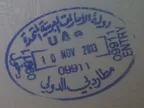
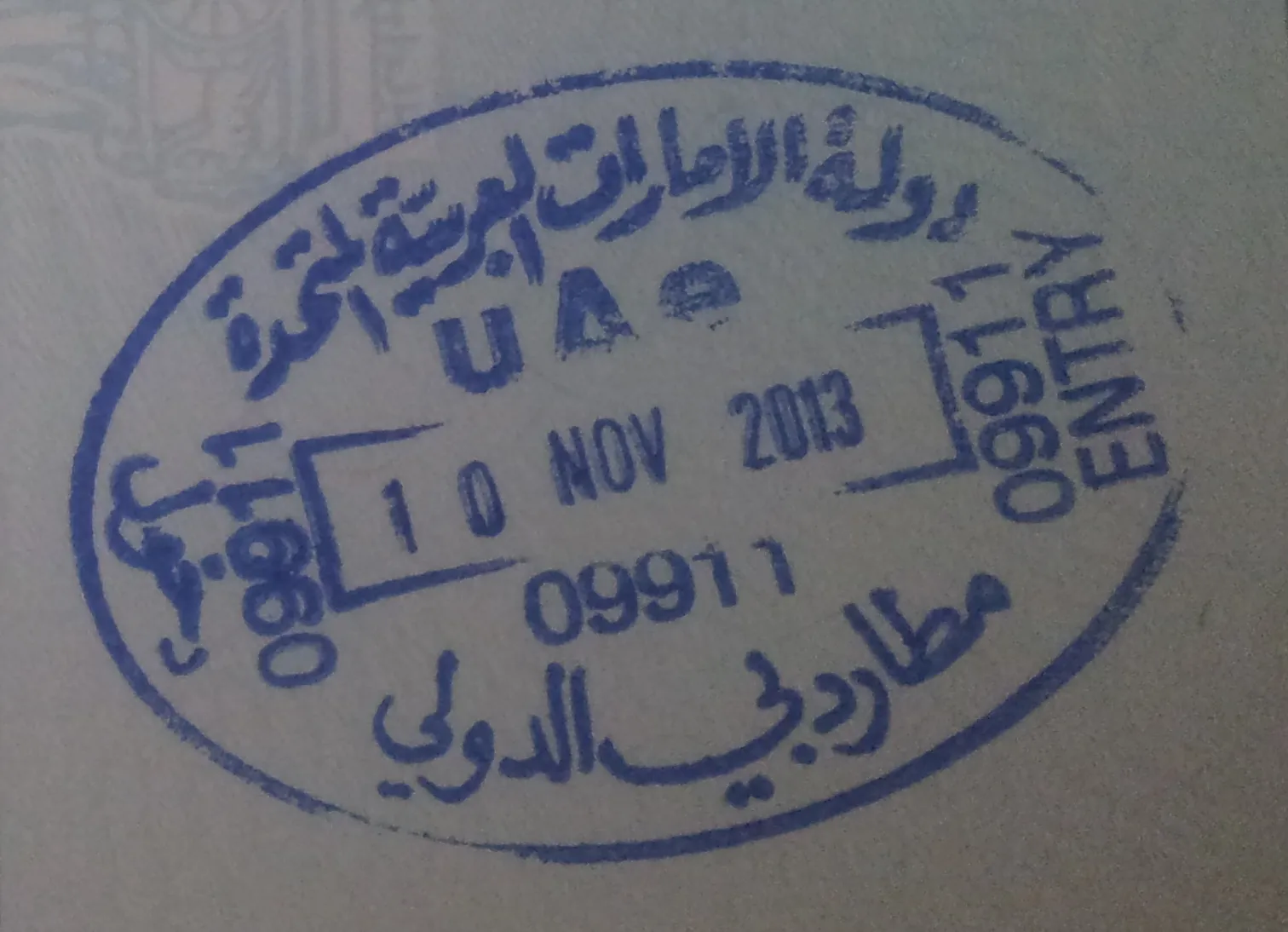
A UAE entry stamp from Dubai International Airport in a passportBaldie / Wikimedia Commons, CC BY-SA 3.0

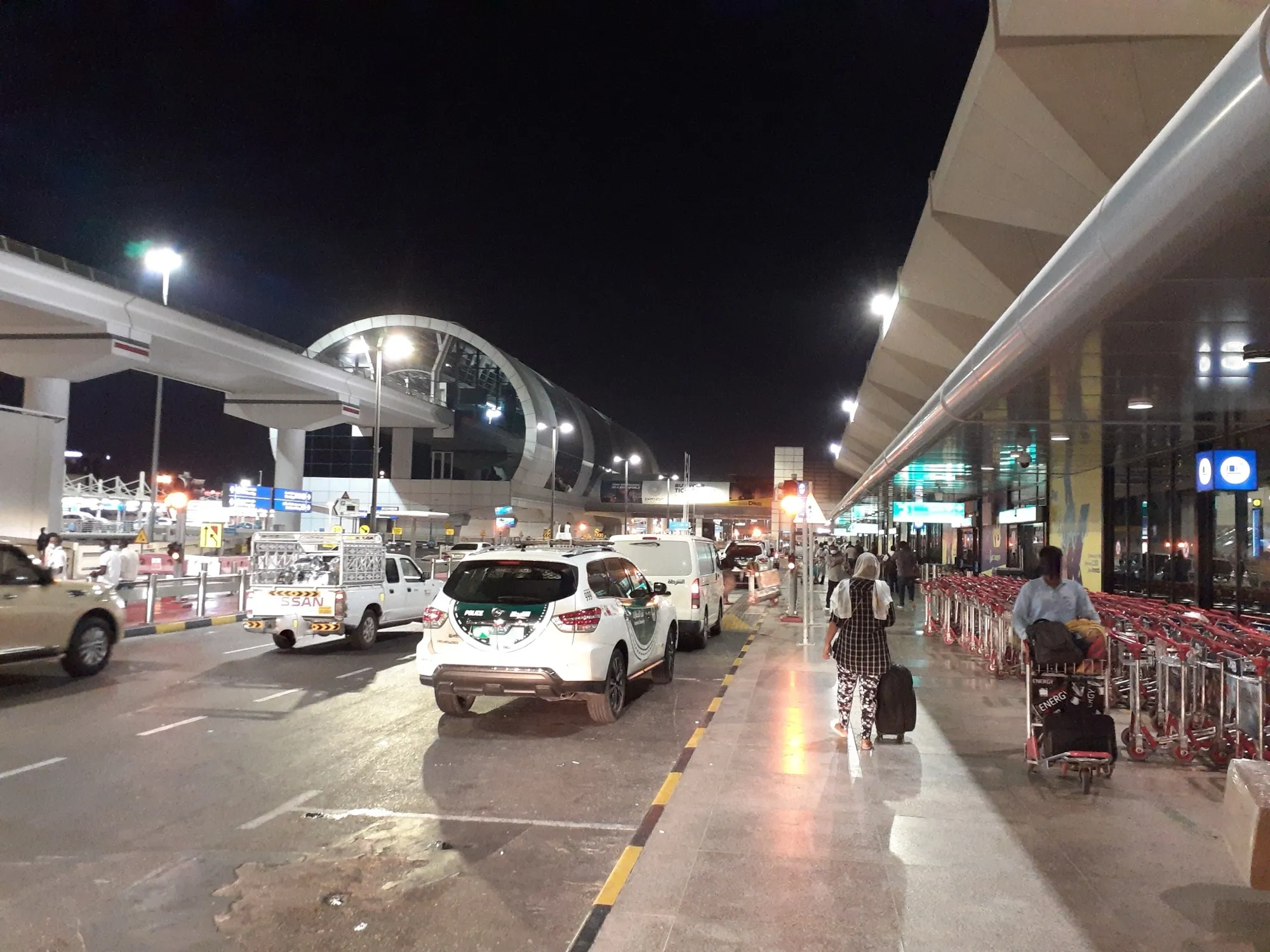
Taxis at the Terminal 1 kerb at night, with the Airport Terminal 1 metro station behind, at Dubai InternationalVitorabdala / Wikimedia Commons, CC BY-SA 4.0

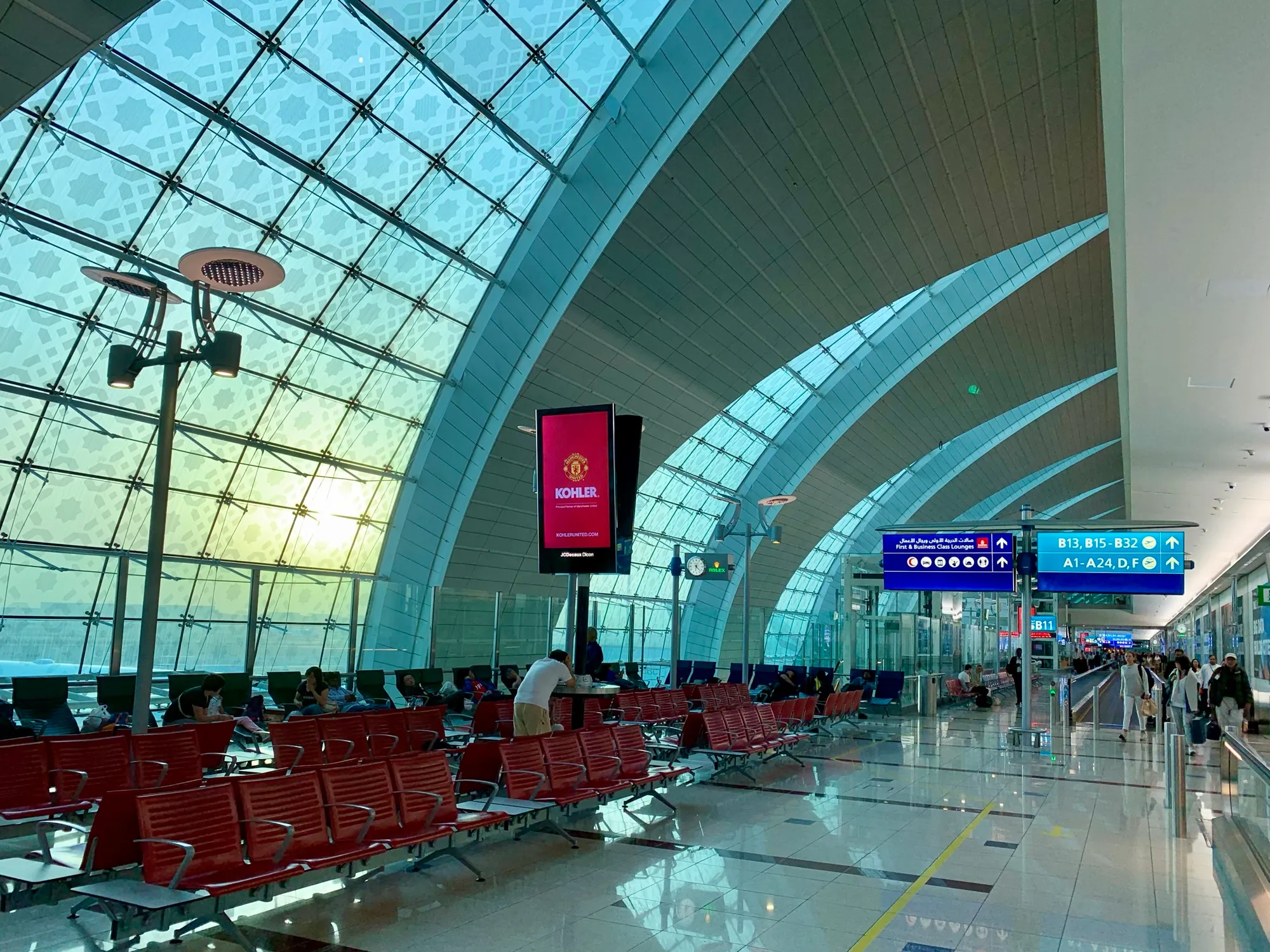
The main hall of Terminal A at Zayed International Airport, with signs to the gates and the Etihad loungesVincent van Zeijst / Wikimedia Commons, CC BY-SA 4.0