By Mohammed Rashad Hussain, Managing PartnerPublished 6 min read
What should you wear on a desert safari? The short checklist
This list works for every Dubai safari, morning or evening, shared or private:
- Loose cotton or linen, light in colour, covering shoulders and knees.
- Closed trainers with socks, ideally an old pair.
- Sunglasses, wraparound if you have them.
- A scarf, buff or shemagh to pull over your nose and mouth.
- A cap or hat that fits snugly or has a chin strap.
- Sunscreen and lip balm, put on before pickup.
- A warm layer from November to March: a jumper, fleece or light jacket.
- A small bag that zips shut for your phone, card and cash.
- Water for the drive out to the dunes.
The sections below cover what to add for the season and for each type of trip. For the wider picture of trips out of the city, see our guide to day trips from Dubai.
Clothes: fabrics, colours and cuts that work in the dunes
Cotton and linen are the easy fabrics for the desert. They breathe on a warm afternoon, and dry sand brushes off them with a shake.
Colour matters more than people expect. Sand, khaki and mid tones hide the dust. Pure white shows every mark from the camp cushions and the 4x4 seats, while black soaks up the low sun at the sunset stop.
For the cut, choose loose trousers or a long, full skirt with a shirt or T-shirt that has sleeves. Tight jeans are hard work in a 4x4 that tips and rolls over the dunes, and they hold sand in every seam. Covering your shoulders and knees keeps the late sun off your skin and is never out of place at a camp shared with other guests.
Shoes: why sandals and flip-flops are a bad idea
On a dune your foot sinks to the ankle with each step, and loose sand pours into anything open. Flip-flops slide off on a slope. Thin sandals leave the top of your foot in the sun and fill up within a few metres.
Closed trainers with socks are the best all-round choice. They grip on the climb up a dune for sandboarding, and they keep the sand out long enough to matter. You will still tip sand out of them at the camp, so leave new white trainers at the hotel.
If you are riding a quad bike or a buggy, the shoe question becomes a safety one. The ATV Safety Institute lists over-the-ankle boots as standard riding kit. Desert operators set their own footwear rules, and your quote passes them on.
Sun, sand and wind: hat, sunglasses, scarf and sunscreen
- Hat. The wind on a dune crest takes a loose hat in seconds. A cap that fits, or a hat with a chin strap, stays on at the photo stops.
- Sunglasses. Wraparound frames keep blown grit out of your eyes. If you wear contact lenses, bring your glasses or a spare pair of daily lenses.
- Scarf. On a dune drive the 4x4s run in single file behind a lead car, and each one throws up sand for the next. A cotton scarf or buff over your nose and mouth makes the photo stops more pleasant.
- Sunscreen. The dunes have no shade at all. Put it on before pickup, even on a January morning with a high of about 24 °C.
- Lip balm. The desert air dries lips quickly, and a small tube fits in any pocket.
- Phone. A zip bag or a pocket that closes keeps sand out of the charging port.
What changes from November to March
These are the months when the desert turns cold after dark. The figures below are averages at Dubai International Airport, on the coast. The open desert has no city around it to hold the day’s heat, so its nights run colder.
| Month | Average high | Average low | Sunset at Lahbab |
|---|---|---|---|
| November | 30.7 °C | 21.1 °C | 5:30 pm |
| December | 26.5 °C | 17.4 °C | 5:30 pm |
| January | 24.4 °C | 15.3 °C | 5:49 pm |
| February | 26.1 °C | 16.4 °C | 6:12 pm |
| March | 28.9 °C | 18.6 °C | 6:26 pm |
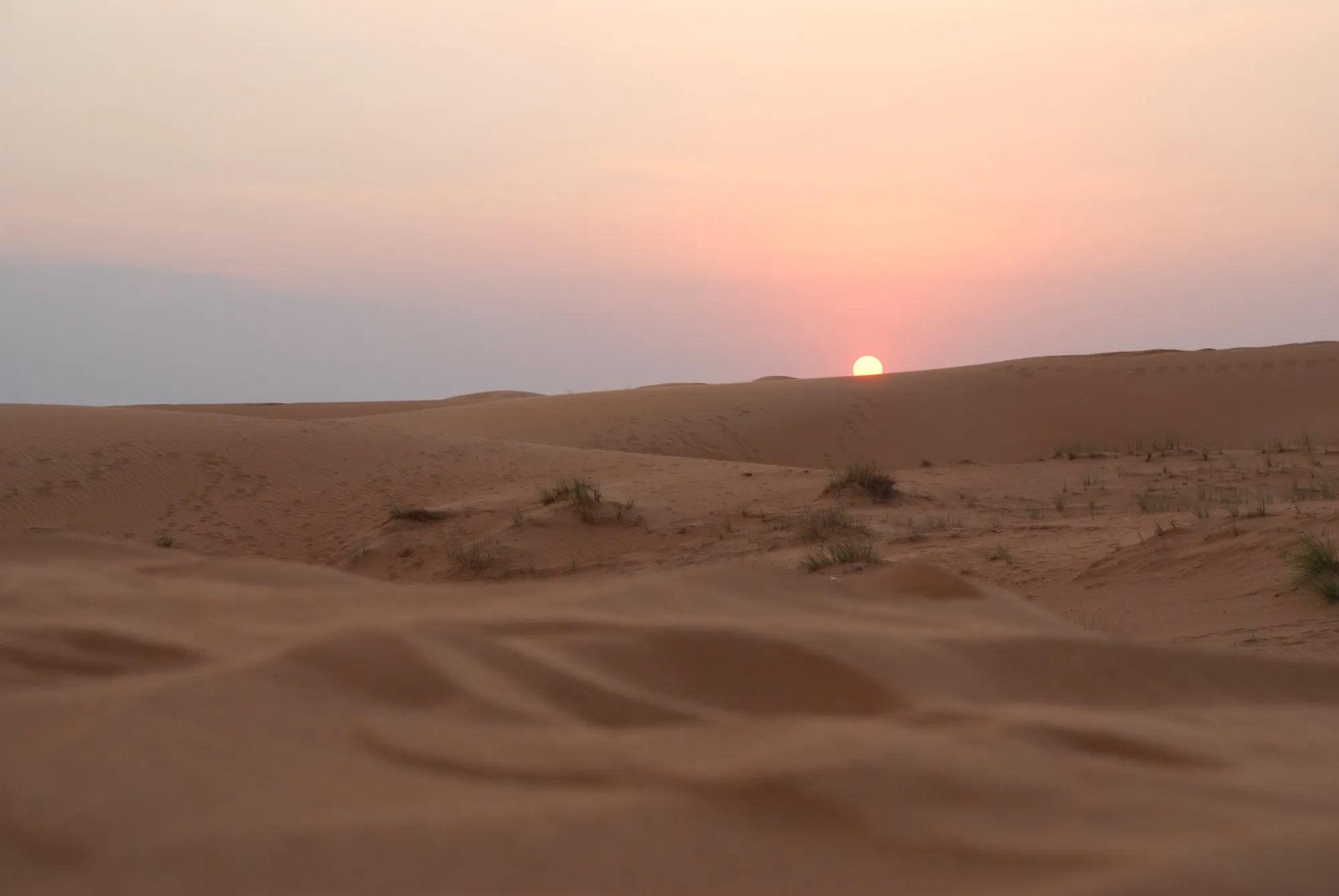
On an evening safari in December, the sun is down by about 5:30 pm, and dinner at the camp is eaten in the dark. Wear long trousers and bring a jumper, fleece or light jacket, even if the afternoon pickup feels warm.
The overnight desert safari keeps you outside from sunset to sunrise, which in mid-December comes at about 6:55 am. Pack a warmer layer for the night, sleepwear that covers you, a toothbrush and a small towel, and ask before the day what bedding the camp supplies.
What changes from June to September
Summer works the other way: no warm layer is needed at all. Average highs at the airport run from 39.5 to 41.9 °C, and even the average lows stay between 28.0 and 31.5 °C.
| Month | Average high | Average low | Sunset at Lahbab |
|---|---|---|---|
| June | 40.0 °C | 28.0 °C | 7:09 pm |
| July | 41.5 °C | 31.2 °C | 7:10 pm |
| August | 41.9 °C | 31.5 °C | 6:53 pm |
| September | 39.5 °C | 28.9 °C | 6:22 pm |
Wear the lightest loose cotton you own, in a pale colour, with a hat for the sunset stop. Drink water on the drive out and keep drinking at the camp. If you are worried about the heat, a private desert safari can start as early as you like on a summer morning: sunrise in mid-June is at about 5:28 am.
Morning, evening, overnight, quad and buggy: what to add for each
| Trip | Add to the basic list |
|---|---|
| Morning safari | Sunscreen before pickup and a cap. From December to February, a layer for the early drive: sunrise is at about 7:04 am in January. |
| Evening safari | A jumper or jacket for dinner from November to March, and the scarf for the dune drive. |
| Overnight safari | A warm layer, sleepwear, a toothbrush, a power bank, and a question to the camp about bedding. |
| Quad bike or dune buggy | Closed shoes or boots, long trousers, long sleeves, gloves, and goggles or wraparound sunglasses. The helmet comes from the operator. |
| Private safari | The same list. On the Assure car plus private 4x4 option, a spare layer can wait in the road car. |
Not sure which time of day to book? Our morning vs evening desert safari guide sets the two side by side, and private vs shared safaris explains who sits in the 4x4 with you.
What to leave at the hotel, and what the camp provides
Leave behind:
- Jewellery that could slip off in the sand, such as loose rings and earrings.
- Heels and smart shoes, which sink at the first step.
- Clothes you want to keep spotless, because sand gets into fabric and seams.
- Large bags, since the 4x4 has little room once every seat is taken.
What the camp provides differs from camp to camp, and your quote lists the inclusions. Ask before the day whether blankets, water or scarves are handed out rather than counting on them. Paid extras at the camp need a card or cash.
Planning a wider trip in the cooler months? Our best time to visit Dubai guide covers the weather month by month. To book, send the date, your group and your pickup area on WhatsApp to +971 56 684 8148, and the quote comes back in the same chat.
Photos in this guide
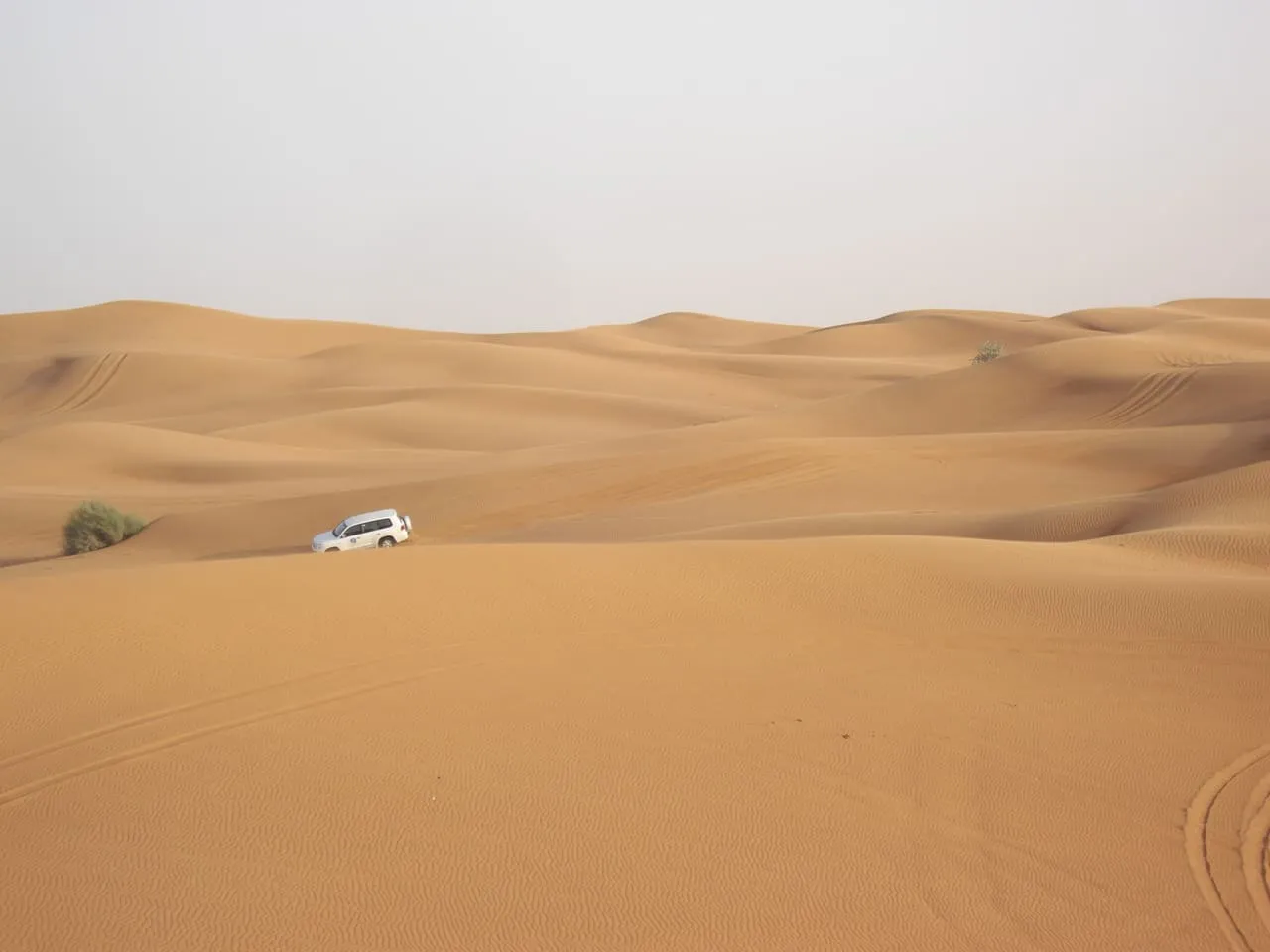
A white 4x4 crossing wide orange dunes in the desert outside DubaiHeba Hashem / Wikimedia Commons, CC BY-SA 4.0
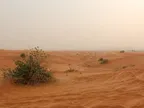
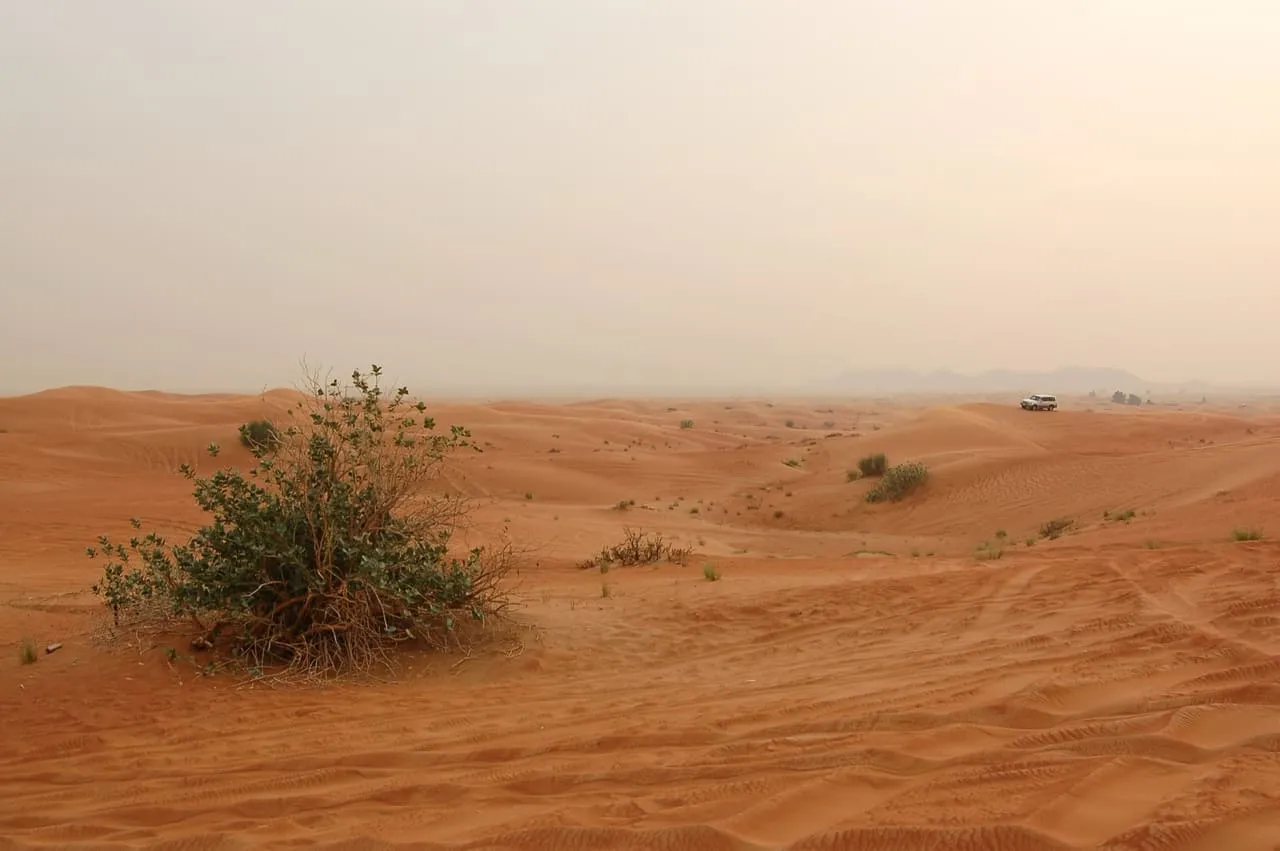
Soft, rippled red sand and low desert shrubs in the dunes outside DubaiBahnfrend / Wikimedia Commons, CC BY-SA 4.0
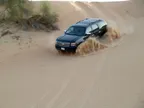
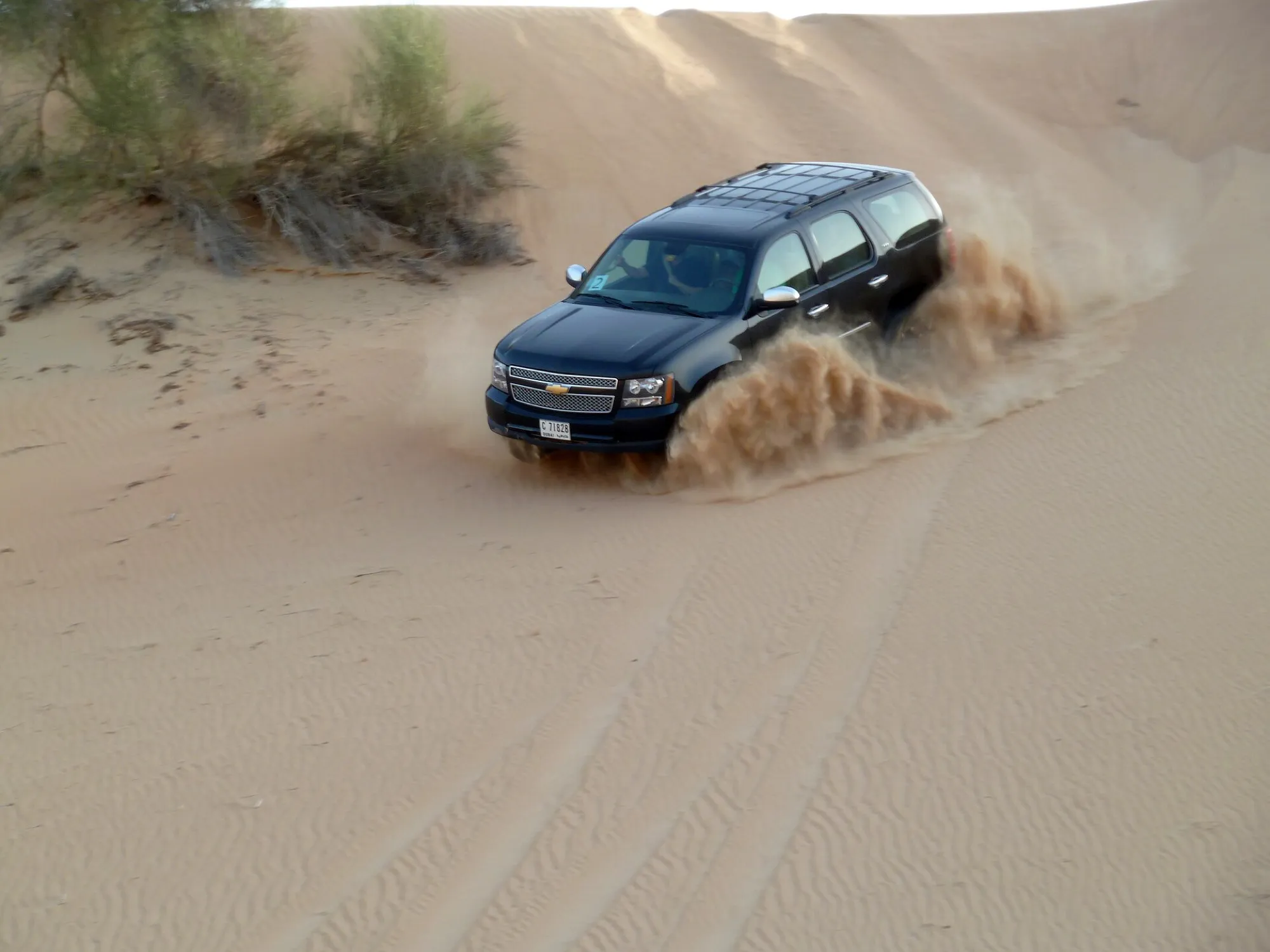
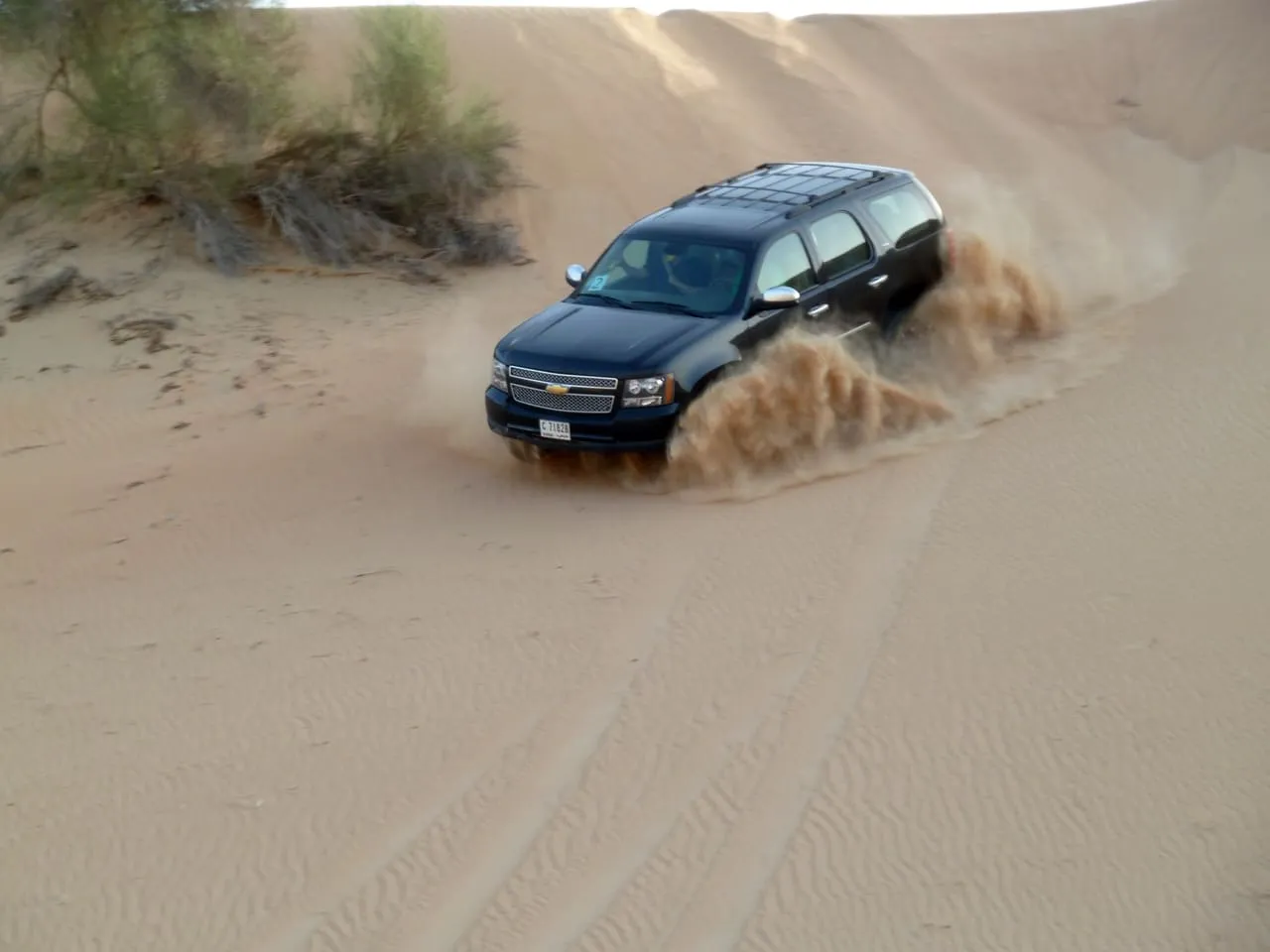
A black SUV throwing up a spray of sand as it climbs a dune on a Dubai desert safariRob Young / Wikimedia Commons, CC BY 2.0
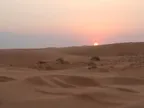
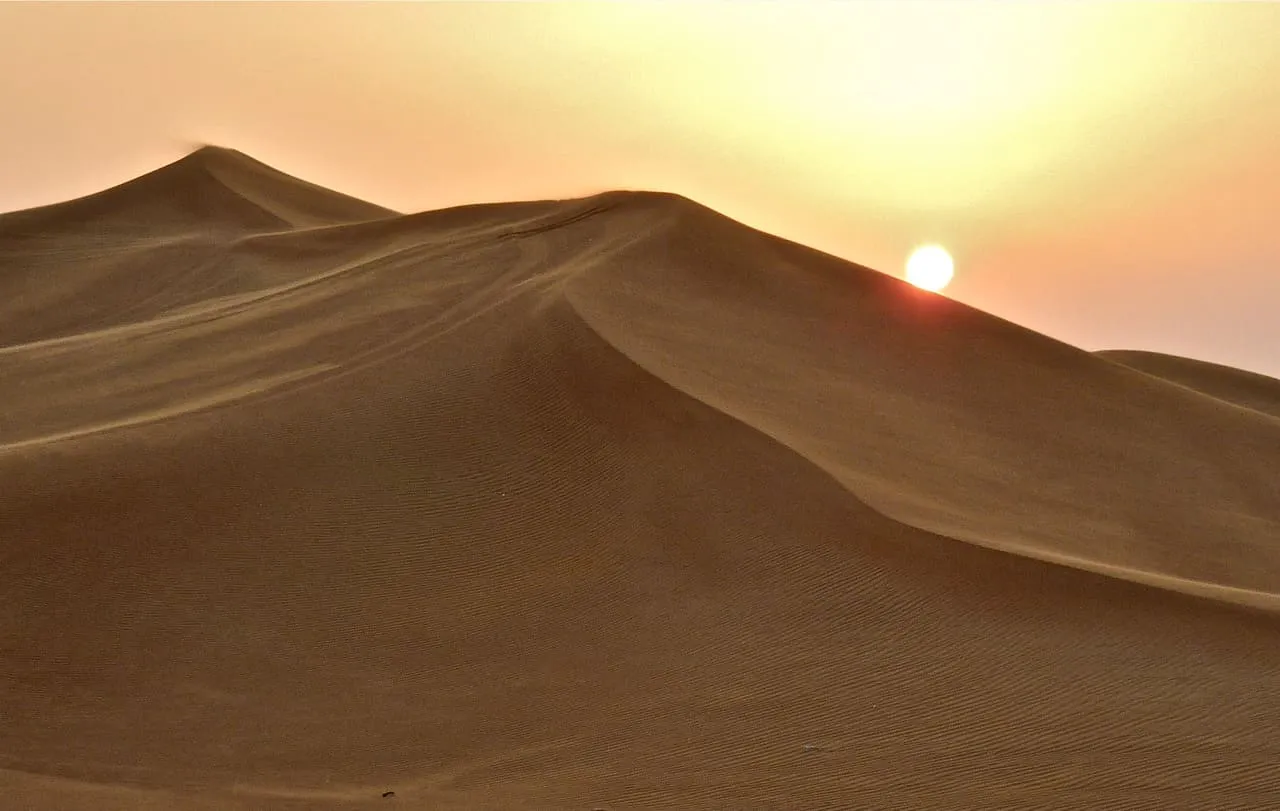
The sun setting behind low sand dunes in the desert outside DubaiImage by www.traveljunction.com / Wikimedia Commons, CC BY-SA 2.0